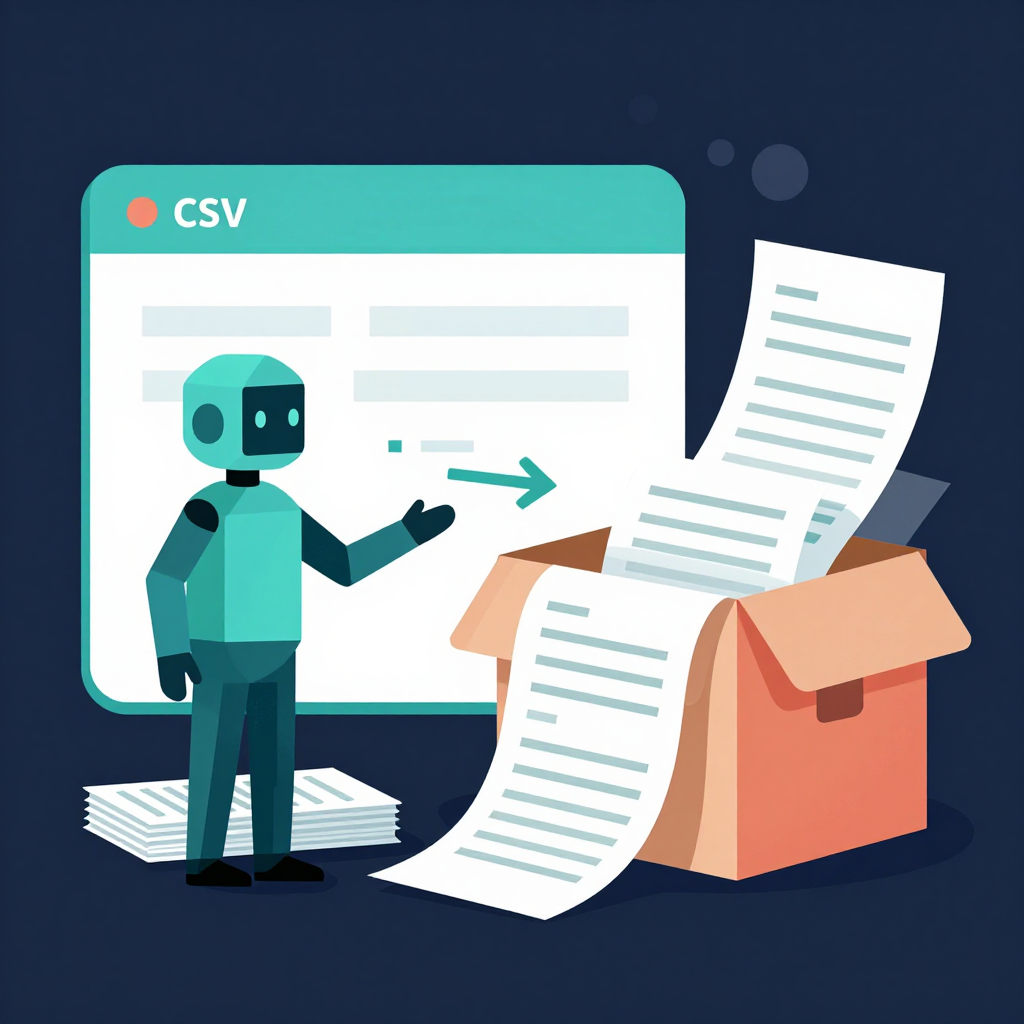
Your agent needs a CSV summary. You paste 80,000 tokens of raw rows into the prompt. The model hallucinates a column that doesn't exist, latency spikes to 11 seconds, and your API bill looks like a parking ticket. There is a better way — and it isn't bigger context windows.
Querying Datasets From an AI Agent, Defined
Querying datasets from AI agents means the model issues a structured MCP tool call to a remote service that holds the data, and gets back only the answer it needs: a count, a slice, a statistic, or a signed artifact. EVIDIQ Atlas implements the pattern as a pay-per-call MCP service, settled in USDT0 via x402 on X Layer.
That's the short version. The longer version is what happens when you stop pasting CSVs into prompts and start treating data access as a tool call instead of a memory dump. The agent's runtime invokes an MCP tool like query_dataset, hands over a dataset identifier and a small intent (filter, group-by, schema, sample), and waits for a structured response. The runtime never holds the underlying rows.
We built Atlas around exactly this shape because we got tired of watching token counters balloon while models quietly started guessing. The agent doesn't need the table — it needs the answer. Every EVIDIQ Atlas call returns three things:
- A small JSON payload scoped to the question.
- A canonical content hash (keccak256) so the result is reproducible.
- A signed artifact URL any downstream consumer can re-fetch and verify.
That's it. No streaming a million rows. No trusting the model to summarize correctly. No guessing what group_by(month) should have meant. When you let an agent query datasets from AI agents through Atlas, the prompt stays small, the answer stays verifiable, and the bill stays sane.
The Context-Window Tax Nobody Budgets For
Here's the math nobody puts on a slide. A modest dataset — say, 50,000 rows of on-chain transactions with three columns — clocks around 8 MB of raw CSV. Tokenized naively, that is roughly 2 million tokens. At current 2026 frontier-model pricing of about $3 per million input tokens, you have just committed to a $6 prompt before the model has said a single word.
Want to compare that dataset against a second one? Double it. Want to include a few thousand tokens of conversation history? Double it again. You are now at $24 per turn, and you have not even asked a question yet.
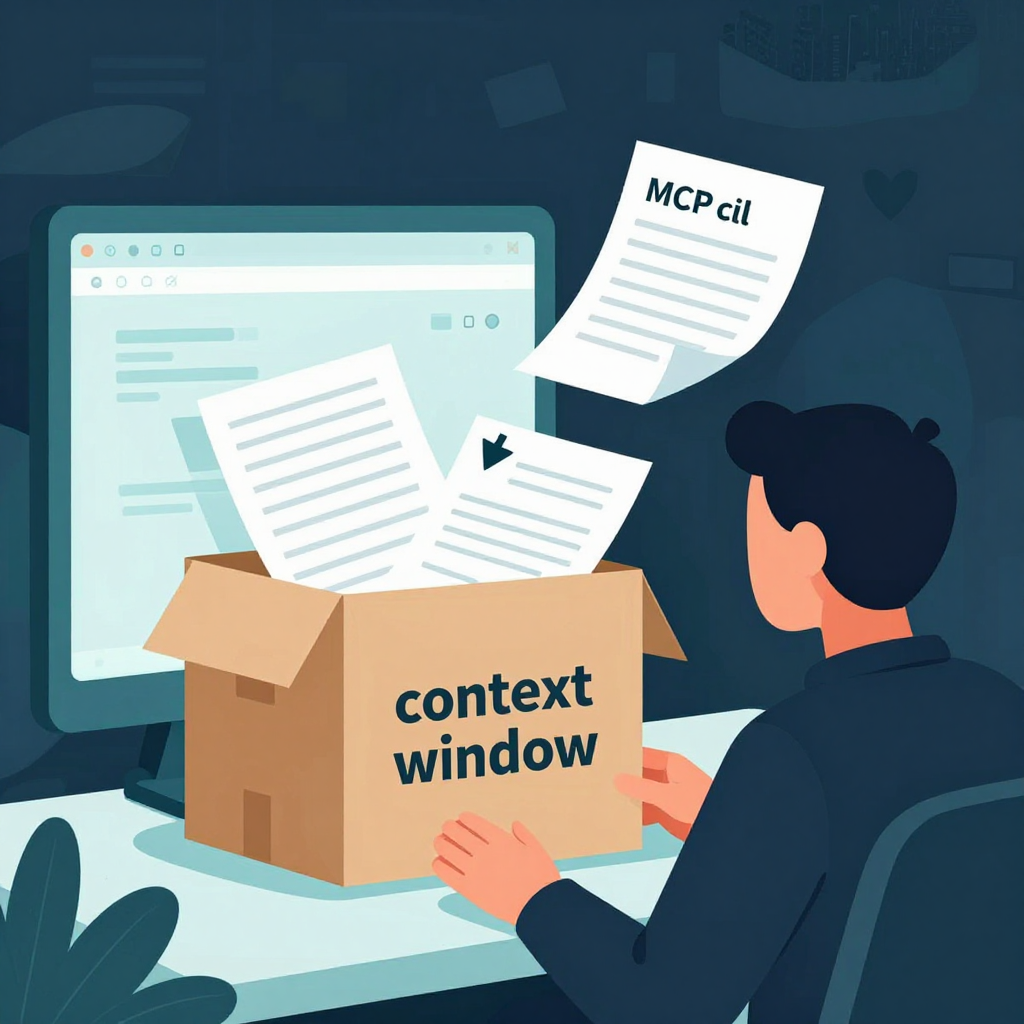
Latency compounds the pain. A 2-million-token prefill is not instant — you're looking at multi-second TTFT on most providers. The agent becomes the thing it was supposed to replace: slow, expensive, fragile. Accuracy gets worse, not better. Long contexts invite the model to anchor on irrelevant rows, fabricate column names, and quietly produce numbers that look plausible but trace back to nothing.
Honestly? Context-dumping is the wrong default. The right default is: ask the data layer a specific question, get a specific answer, and let the agent do what agents are actually good at — reasoning over a small, trusted result. This is exactly the trade-off Atlas is built around.
The economics flip the moment you let the agent query datasets from AI agents through Atlas instead:
| Approach | Per-turn cost | Latency | Hallucination risk |
|---|---|---|---|
| Paste raw rows | $6–$24 | 4–11s | High |
| query_dataset call | $0.002–$0.02 | 0.4–1.2s | Low |
Two-to-three orders of magnitude difference on cost, an order of magnitude on speed, and the artifact you get back is signed and reproducible. There is no world in which stuffing CSVs into a context window is the right answer in 2026.
One Question, One Priced Call
Here is the cleanest way to query datasets from AI agents for a real question in 2026. Let's walk a real call. Your agent has been asked: "How does Q1 2026 on-chain volume on Base compare to Q1 2026?" It knows two dataset IDs it can read through Atlas — base_volume_q1_2026 and base_volume_q1_2025. Here's the flow:
- The agent calls
estimate_cost(dataset="base_volume_q1_2026", query="sum(volume_usd) group_by(month)"). This call is free. It returns{ "calls": 1, "usdt0": "0.0042", "bytes_in": 64, "bytes_out_estimate": 312 }. - The agent repeats
estimate_costfor the second dataset. - The agent commits. It issues
query_dataset(dataset="base_volume_q1_2026", query="sum(volume_usd) group_by(month)")as a JSON-RPC call to the Atlas MCP endpoint. - Atlas responds with HTTP
402 Payment Required, carrying an x402 v2 challenge:{ scheme: "exact", network: "x-layer", asset: "USDT0", payTo: "0x…", amount: "4200" }. - The agent signs an
EIP-3009 transferWithAuthorizationmessage off-chain — its wallet never sends a transaction itself, just authorizes the payment. - The agent retries the call, attaching the
X-PAYMENTheader per x402. - Atlas returns a small JSON artifact: monthly sums, a content hash, and a verify URL.
Same call against the second dataset. Then compare_datasets(left=<hash1>, right=<hash2>, metric="absolute_delta") — which returns a tiny diff table plus a comparison artifact, hashed and signed.
Every call is one tool invocation, one priced response, one auditable artifact. The agent's prompt never sees a million rows. We deliberately designed Atlas so that estimate_cost is the only free tool in the suite — because budgeting before spending should be the default, not a premium feature.
For teams wiring this up, the EVIDIQ Sentinel docs cover how to gate which datasets an agent is even allowed to call, and the EVIDIQ Operator docs walk through running your own signed-call policy. Together with Atlas, that is the full read path: decide who is allowed to ask, ask cheaply, sign the answer.
Where Atlas Fits Next to Sentinel and Notary
We think of EVIDIQ's MCP family as three roles, one for each side of an agent interaction:
- Sentinel answers the question "should I trust this counterparty?" — it probes identity, capability, and reputation before your agent connects.
- Atlas answers the question "what does this data actually say?" — it runs bounded, priced queries against datasets and returns signed artifacts.
- Notary answers the question "did this model actually produce this output?" — it receipts what the agent returned to a human or to another agent.
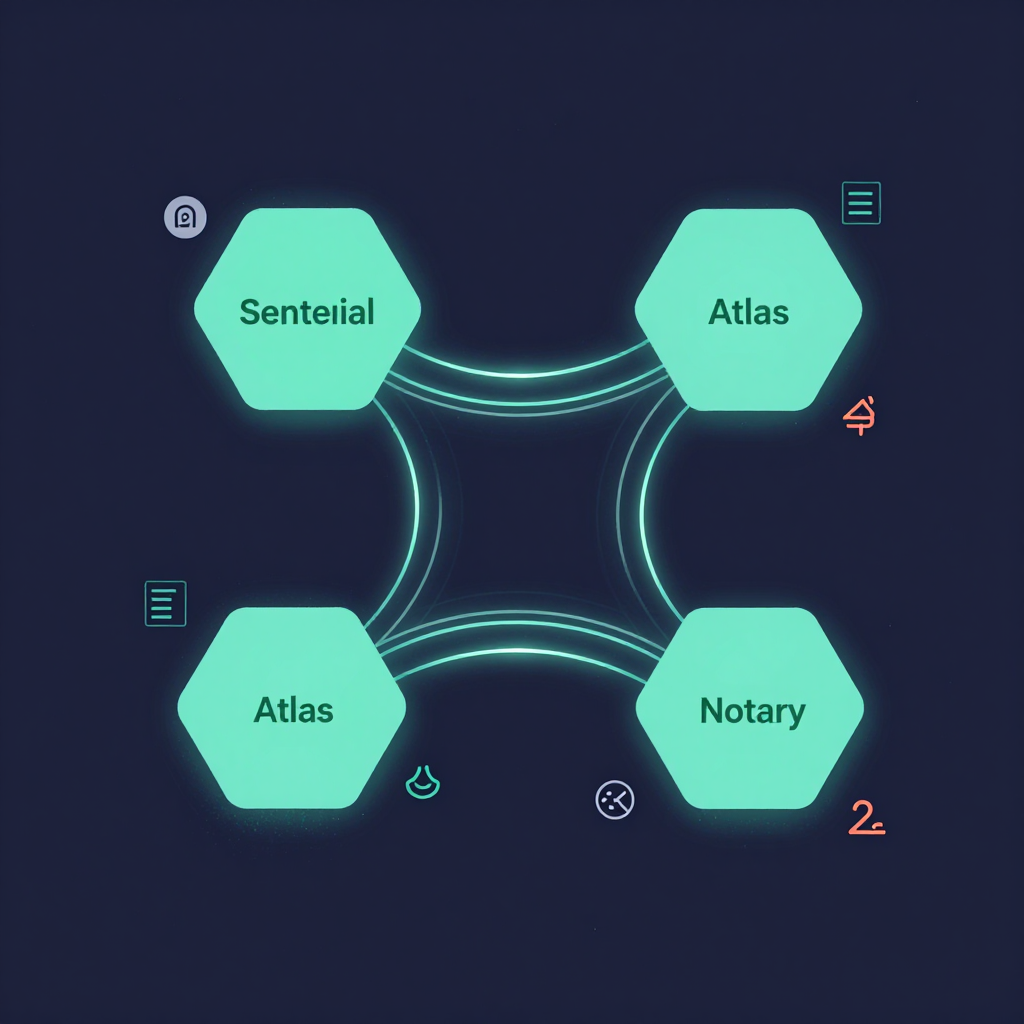
All three share the same economic backbone: x402 v2 over X Layer, USDT0, the same EIP-3009 flow, and a per-call meter. So an agent's runtime doesn't need three payment integrations — it needs one. Any of the three calls can independently be wrapped in a Sentinel precheck (free or paid) so a downstream service can reject traffic from unverified agents.
Practically, that means a workflow like this fits in one MCP session:
- Sentinel — "Who is this agent and is it trustworthy?" → trust score.
- Atlas — "Pull Q1 2026 stats and Q1 2026 stats, compare them." → two artifacts + one comparison.
- Notary — "Receipt the final answer my agent will return to the user." → signed artifact.
Each step produces its own evidence. Each step is priced. None of them require trusting EVIDIQ with custody of your data, your funds, or your authority. We produce receipts; you decide what to do with them. The full surface is documented in the EVIDIQ docs, with the Atlas entry point at EVIDIQ and the EVIDIQ Notary docs covering the receipt side.
Worth noting: Atlas today runs against curated public datasets — on-chain activity, market summaries, reputation-anchor signals. Custom private datasets are a roadmap conversation; if that is your need, ping us.